


CAPEX and OPEX in Hydrogen Projects
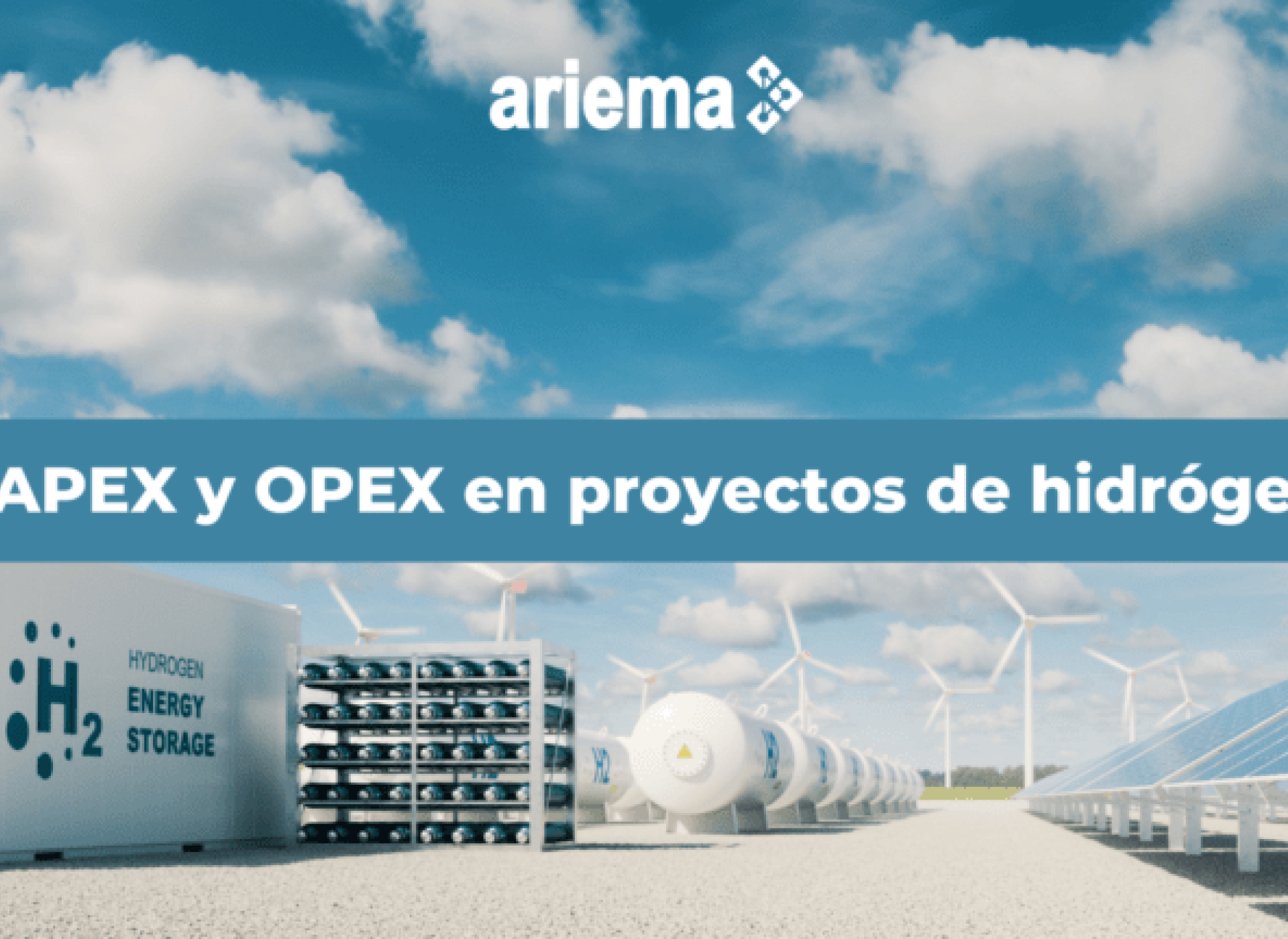
In the context of projects related to green hydrogen production and applications, the terms CAPEX (Capital Expenditure) and OPEX (Operational Expenditure) are essential.
In this blog post, we will briefly review how these two financial components interact in renewable hydrogen projects and how their proper management can be crucial to long-term success. Understanding how to effectively balance CAPEX and OPEX is essential for making strategic decisions when planning and implementing these types of projects, as they have a direct impact on profitability and economic viability.
Definition
CAPEX (Capital Expenditure): This refers to the capital expenditure required to establish the initial infrastructure of a project. It includes investment in long-term assets, such as the purchase of equipment, construction of facilities, engineering costs and permit processing. CAPEX represents the initial financial outlay required to launch the project and establish its operational foundations. Maintenance or replacement CAPEX covers the investment required to replace equipment and facilities as they deteriorate.
OPEX (Operational Expenditure): This concept refers to the ongoing operating costs associated with running and maintaining the project throughout its useful life. OPEX includes expenses such as equipment maintenance, the supply of raw materials, the energy required for operation, staff salaries and other recurring costs that keep the hydrogen project running.
What are the capital costs (CAPEX) in green H2 projects?
Each project has specific characteristics that make it very difficult to determine capital costs in general terms. However, to give an idea, CAPEX includes the price of the land where the facility will be built, plant design and construction costs, renewable electricity generation equipment (turbines, PV panels…), the price of the electrolyser, the cost of H2 storage equipment…
Final CAPEX is usually expressed as a monetary amount (e.g. €1.54 million) and also as the capital cost per unit of power (e.g. €0.96/W).
What are the operating costs (OPEX) in green H2 projects?
Once the green hydrogen production plant is operational, the costs required to keep the plant running come into play.
OPEX includes, among other elements, the price of the electricity used to generate hydrogen, the cost of water, equipment maintenance costs, the salaries of the staff operating the plant, and any potential rental costs for the land/facility…
Balancing CAPEX and OPEX in an H2 project
Over the years in which terms such as the “hydrogen economy” have been coined and subsequently dismissed, there has been considerable discussion about established assumptions that are themselves evolving, as well as questions that are gradually being answered.
Many hours have been spent discussing the price of hydrogen, whether green hydrogen production projects will ever become profitable, and whether electrolysers (the main equipment used to produce green hydrogen) will reach a price that makes them economically viable. Perhaps the fact that there has been so much debate indicates the need for clarification and analysis to shed some light on this now almost outdated discussion.
Technological maturity
In the early stages of the hydrogen sector's development, as is the case with any emerging sector, the focus was on developing the technology until adequate performance levels were achieved. With a low level of technological maturity, the first installations and demonstration projects, which gradually began to resemble what the future might look like, required major investment. Almost manual production of equipment tailored to each specific situation, long hours of engineering, design and research that had to be reflected in equipment prices, and a lack of experience in both operation and permit processing made these early installations highly capital-intensive.
Economies of scale will reduce costs
Inevitably, the sector has focused on reducing these investment costs by pursuing standardisation and automation in the mass production (or at least much larger-scale production) of equipment in order to bring prices down. This has resulted in very significant reductions in the price of the main equipment (particularly electrolysers and, to a lesser extent, fuel cells), although production capacity has not yet reached the level that the market appears to demand (as evidenced by the long lead times electrolyser manufacturers are currently quoting for delivery).
However, now that the issue of investment costs is on track —on track, but not resolved, as prices are still expected to fall further—, attention is shifting towards operating costs. Design improvements in durability —which affect maintenance costs— and efficiency have helped to reduce a budget item that nevertheless remains a concern.
Operating electrolysers (the main technology used to produce green hydrogen) is not labour-intensive, so there is limited scope for improvement in this area. The major issue lies in the price of electricity. Hydrogen is not an energy source but an energy carrier because, with very few exceptions, it is not found freely in nature ready for use and therefore has to be produced. When we talk about green and/or renewable hydrogen, this involves the use of electricity (also renewable) or biogas/biomass.
Leaving this second route aside, the component with the greatest impact on hydrogen production costs is the cost of electricity. Although improvements in electrolyser efficiency are expected, this component will always mean that hydrogen is more expensive than the electricity used to produce it (without considering the benefit provided by hydrogen's storage capability).
If we take a broader view and consider the cost of hydrogen for the end consumer, other operating costs begin to emerge, the most significant of which are hydrogen compression (or liquefaction) and transport. Improvements are also expected in these areas, but these costs should neither be forgotten nor underestimated.
Invest more in CAPEX or OPEX?
Therefore, although investment costs had the greatest impact on the price of hydrogen when the sector was first developing, as its development progresses, operating and maintenance costs are becoming increasingly important, and these are much more difficult to reduce than investment costs.
In summary, the cost of green hydrogen is largely determined by the cost of the electricity used, which means that electrolyser efficiency should carry considerable weight when selecting an electrolyser, rather than focusing solely on its price.
Financing approaches: United States and Europe
Although the sector is becoming more mature and moving closer to the commercial deployment stage, the cost of hydrogen is still not competitive with the energy sources it aims to replace. Whether in industrial applications replacing natural gas or in mobility replacing diesel, hydrogen remains significantly more expensive.
However, in order to narrow this cost gap, while other factors such as decarbonisation or green transition policies do not impose a change, the hydrogen sector requires public funding for its deployment.
In an initial phase, when the technology was still at an early stage, programmes providing funding for research projects were essential. Although these will always be necessary because the technology requires continuous improvement, as it has advanced, funding has increasingly been directed towards covering the high investment costs of the first major demonstration projects, both for hydrogen production and for its use in industry or mobility.
Hydrogen valleys are also attracting substantial investment support in an attempt to reduce the cost gap between these clean technologies and the conventional technologies they replace. At this stage, both the United States and the European Union maintained similar forms of support, primarily funding research costs and subsequently investment in key components of the hydrogen value chain. Some differences have always existed, such as the way fuel cell vehicle deployment is supported/required in California compared with the EU, or the much more aggressive use of tax incentives in the United States in sectors such as forklift trucks, but these were relatively limited.
New approaches
At this point, as the sector gradually moves closer to the commercial deployment stage, the situation is changing. The EU has launched large-scale support programmes for the sector, maintaining its focus on investment costs while also supporting factories producing key components such as electrolysers and seeking to establish synergies between projects across the entire Union.
With a much simpler and more pragmatic approach, the United States has launched a support programme for end users, providing USD 3 per kilogram of hydrogen, in other words, support for operating costs. The EU has responded with a pilot call for an auction of hydrogen production projects, also providing funding for operating costs.