


The Community of Madrid promotes the development of sustainable aviation fuels with a new technological Innovation hub
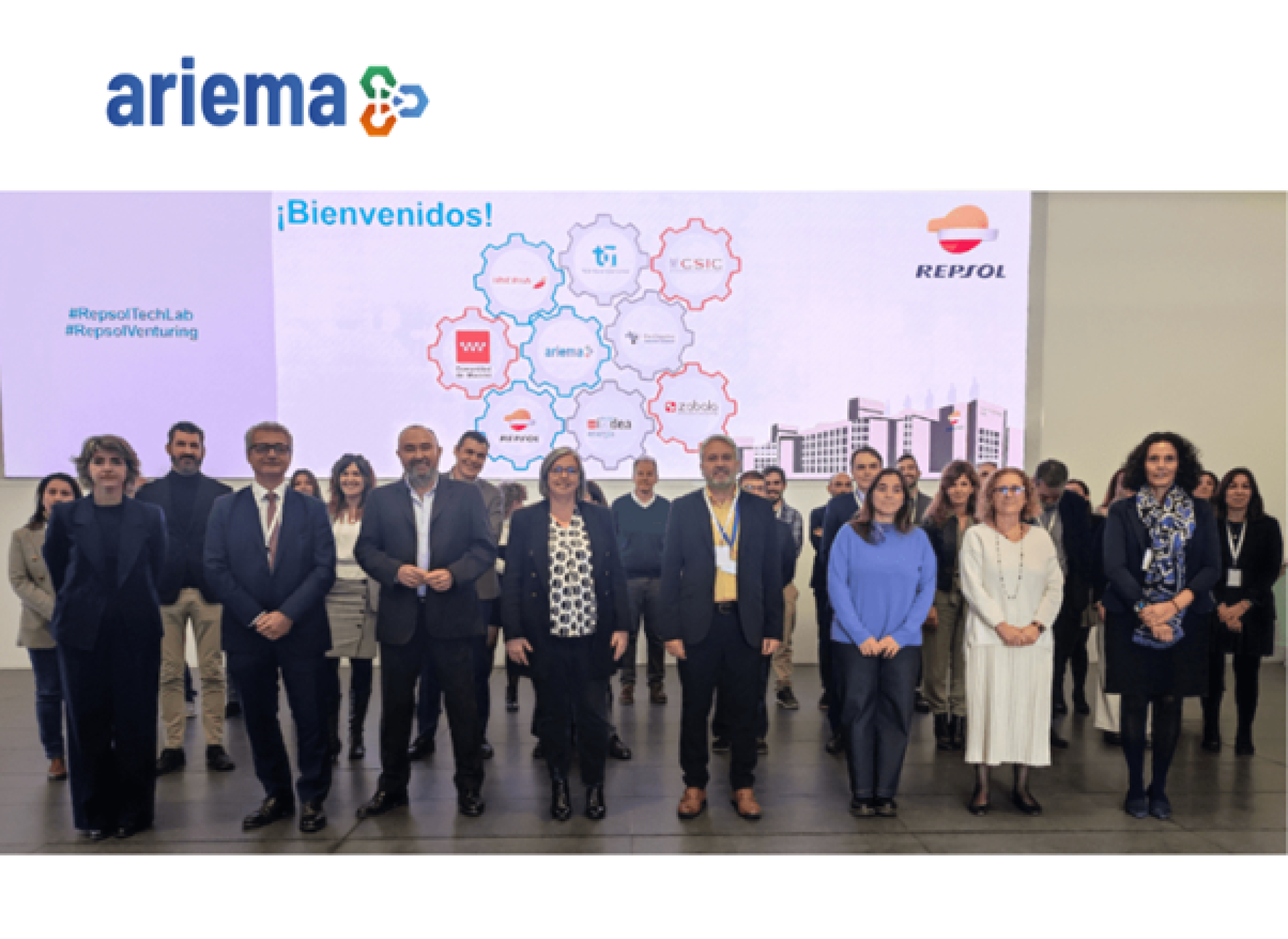
- The Madrid Vuela Sostenible project is expected to run for three years and will receive more than €3.7 million in funding from the Community of Madrid.
- ARIEMA, an expert in hydrogen technologies, will contribute its expertise to the project by carrying out studies on the production of renewable hydrogen used in the intermediate reactions involved in producing sustainable aviation fuels.
The new MADRID VUELA SOSTENIBLE project aims to develop technologies for the production of sustainable aviation fuels (SAF), as well as to foster a culture of public-private cooperation between the different stakeholders within the science-technology-business ecosystem of the Community of Madrid.
To launch this initiative, a consortium has been created, led by Repsol through its Technology Lab innovation centre, located in Móstoles, together with the Community of Madrid research centre IMDEA Energy, technology SME ARIEMA and start-up EVOENZYME. This multidisciplinary group of organisations brings together capabilities, experience and knowledge acquired through previous projects such as the Madrid + Circular Hub:
In addition, this partnership has an external advisory board providing support to the project, including companies such as Iberia and Técnicas Reunidas, as well as the CSIC, Spain's leading research institution.
The Madrid Vuela Sostenible project is expected to run for three years and will receive more than €3.7 million in funding from the Community of Madrid, demonstrating the regional government's commitment to innovation in order to promote these renewable fuels, research into new technological pathways and support for sustainable industry and transport.
This technological innovation hub has been created with the aim of generating and sharing knowledge about new technologies in the fields of decarbonisation and the circular economy, facilitating the recovery of waste for subsequent use as a raw material in the production of low-carbon aviation fuels. This will help accelerate the implementation of new industrial processes that contribute to the transition towards a more sustainable energy model, reducing CO2 emissions and helping to mitigate global warming.
Reducing CO2 emissions
In this regard, sustainable aviation fuels can reduce CO2 emissions by more than 90% compared with conventional aviation fuel when produced from waste, and by up to 100% in the case of synthetic fuels. The measures established under the ReFuelEU Aviation regulation require airlines to use 2% renewable fuels in 2025, 6% in 2030 and 70% in 2050.
Repsol is promoting SAF as an effective solution for reducing emissions, as it represents the fastest route to contributing to the decarbonisation of the aviation sector. Repsol has partnered with airlines including Iberia, Ryanair and Vueling. In addition, Repsol is bringing its plant in Cartagena (Region of Murcia) into operation, the first facility in the Iberian Peninsula dedicated exclusively to the production of advanced biofuels and one of the first of its kind in Europe. It will have an annual production capacity of 250,000 tonnes of SAF and renewable diesel, produced from various types of waste, mainly used cooking oil and waste from the agri-food industry, and will enable a reduction of 900,000 tonnes of CO2 per year.
IMDEA Energy, meanwhile, is working on several projects with international partners to explore new sustainable pathways for SAF production through the conversion of CO2 and different types of urban, agricultural and industrial organic waste, as well as the use of yeasts, creating synergies between biotechnology and catalysis. It is also analysing their sustainability, taking environmental, economic and social aspects into account. This contributes to strengthening research and innovation and increasing visibility in order to address new global challenges in the field of sustainable mobility.
EvoEnzyme SL has become involved in this project due to its extensive experience in developing industrial enzymes. In the context of sustainable aviation fuels, EvoEnzyme contributes its expertise in creating biocatalysts and optimising enzymatic reactions for processing biomass waste. Its participation in the project will help optimise the production of bioethanol, a key renewable raw material for SAF production.
Finally, ARIEMA, an expert in hydrogen technologies, will contribute its expertise to the project by carrying out studies on the production of renewable hydrogen used in the intermediate reactions involved in producing sustainable aviation fuels. The use of renewable hydrogen in the SAF production process will help reduce the process's carbon footprint and promote the adoption of new, more sustainable mobility practices.