


Fuel Cells and Submarines
The military industry as a whole is, and traditionally has been, one of the main drivers in the development of new technologies and innovations, with numerous examples across different fields. The level of funding available for military projects and the high cost that can be borne for each device can make the difference and trigger the development of a technology whose benefits ultimately filter down to consumers over time. The advantages offered by fuel cells become particularly evident in certain ‘niche’ applications, with a very specific set of requirements that other technologies simply cannot meet. One such example is backup power generation systems for telecommunications antennas in remote locations, recently discussed in another of our articles; another clear example is military applications.
 As might be expected, fuel cells have attracted the attention of military authorities for decades. These systems are not only lightweight electrical generators with long operating times and zero environmental impact, but also offer important tactical advantages such as extremely quiet operation, the absence of waste products (only water) and low operating temperatures (at least in PEMFCs and DMFCs). In particular, US and German defence organisations have been especially active in implementing fuel cell systems for portable military power generation and use in remote areas.
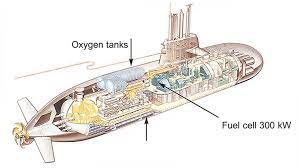
Electrolysis systems are relatively common in submarines for producing the oxygen required to maintain a breathable atmosphere; the next stage in the development of these applications will be to use fuel cells for propulsion systems. Weight, response speed, noise, exhaust gases and the amount of heat generated are important factors in submarine operations and, as mentioned above, these are areas in which fuel cells offer very significant advantages. However, the use of fuel cells (or electrolysers) in submarines remains relatively unknown to the general public. This is due, on the one hand, to the secrecy inherent in any military project and, on the other, to the specific characteristics of this market: submarines represent very substantial, one-off investments and have very long service lives.
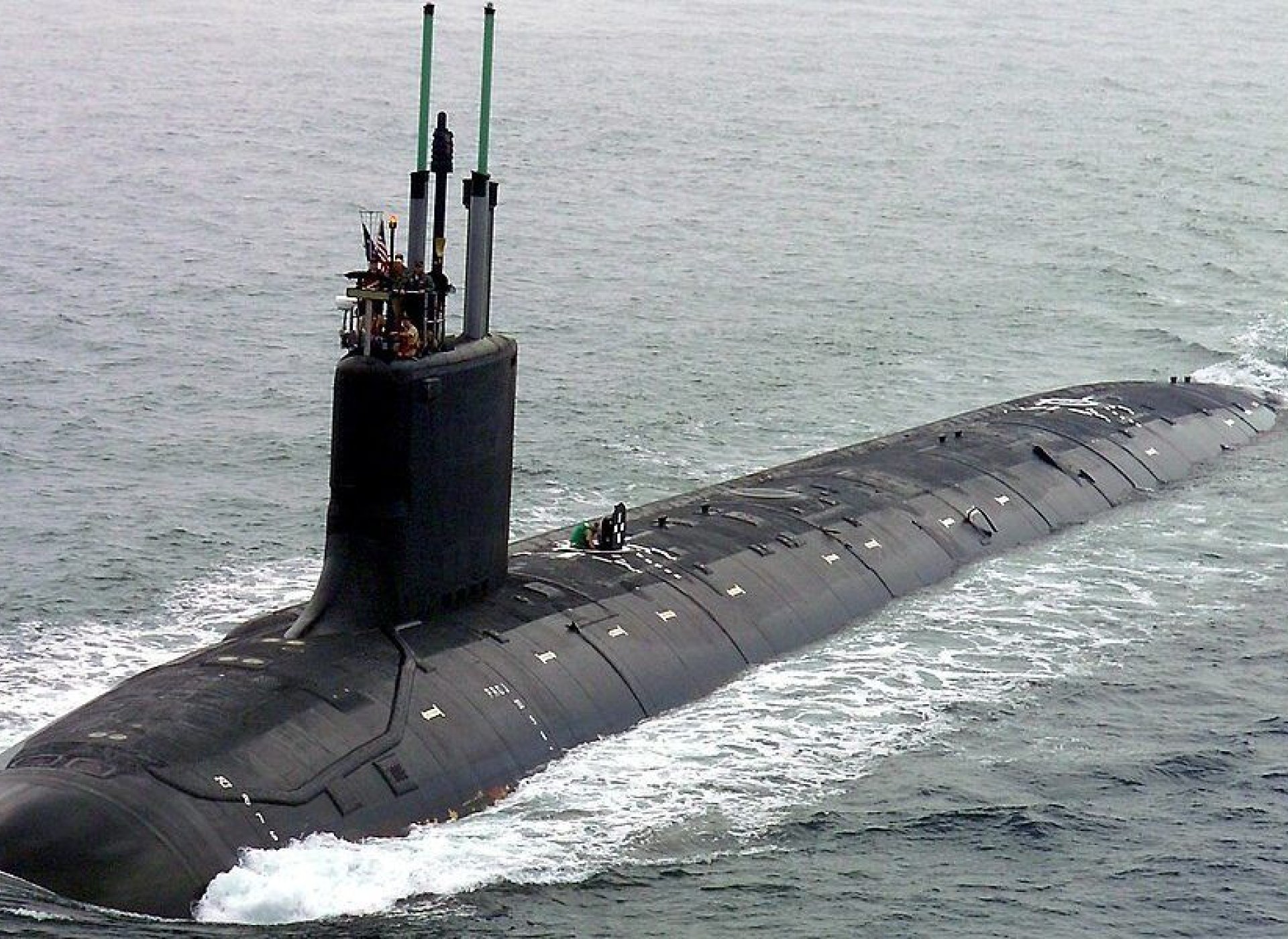
The most notable initiative to integrate fuel cells into submarines to date has been the development of the U212-class attack submarine for the German Navy, the most recent unit of which was delivered last May. These vessels are capable of travelling long distances while submerged thanks to their advanced air-independent propulsion system: the key component of this system is a 34kW PEM fuel cell, developed in collaboration with the German Navy since 1985. There are other (non-nuclear) air-independent propulsion systems: closed-cycle diesel engines, closed-cycle steam engines and Stirling engines. All these types of engines generate vibrations and significant amounts of heat, both of which are strategically undesirable characteristics as they increase the vessel’s detectable ‘signature’.
The advantages of fuel-cell propulsion systems were demonstrated this year when the U32, equipped with this technology, set a new record for non-nuclear submarines by remaining submerged for eighteen days without any exchanges with the outside environment. Although the scope for growth in this application is relatively limited, as the submarine market is unlikely to expand significantly, it provides a vivid demonstration of the technical versatility of fuel cell systems and their ability to meet the requirements of a wide variety of applications, both military and commercial.
Article based on the original text ‘Fuel Cells and Submarines’, published by Fuel Cell Today in July 2013.