Green Hydrogen Production from Water
When analysing the surface of the planet, it can be estimated that 71% is covered by water, while the remaining 29% is land mass. However, surface area is not equivalent to mass, so we cannot say that the Earth is 71% water and the rest is land. We need to be a little more specific.
Of the total amount of water, 96.5% is salt water and is distributed throughout the oceans, while the remaining 3.5% is fresh water found on the surface in the form of rivers and streams, underground in natural aquifers, and as ice at the poles and on mountain peaks.
Today, energy represents one of the largest production costs in any sector. One of the most economical and cleanest ways of generating energy is through water.
Hydroelectric power accounts for 20% of the electricity generated worldwide. In Spain, it accounts for 15% of the energy generated.
Furthermore, splitting water into hydrogen and oxygen provides an alternative to fossil fuels.

As Jules Verne wrote in his novel “The Mysterious Island” (1874)
“What are they going to burn instead of coal? Water, replied Pencroft. Water, decomposed into its elements by electricity.
Yes, my friends, I believe that one day water will be used as fuel, that the hydrogen and oxygen of which it is composed, used separately or together, will provide an inexhaustible source of light and heat. Water will be the coal of the future”.
So… how is hydrogen produced from water?
For the production of hydrogen, certain thermal, chemical or electrochemical transformations must be carried out using different compounds that are abundant in nature, such as hydrocarbons or water.
To do this, an energy source is required: “Hydrogen will only be as green as the energy used to produce it”
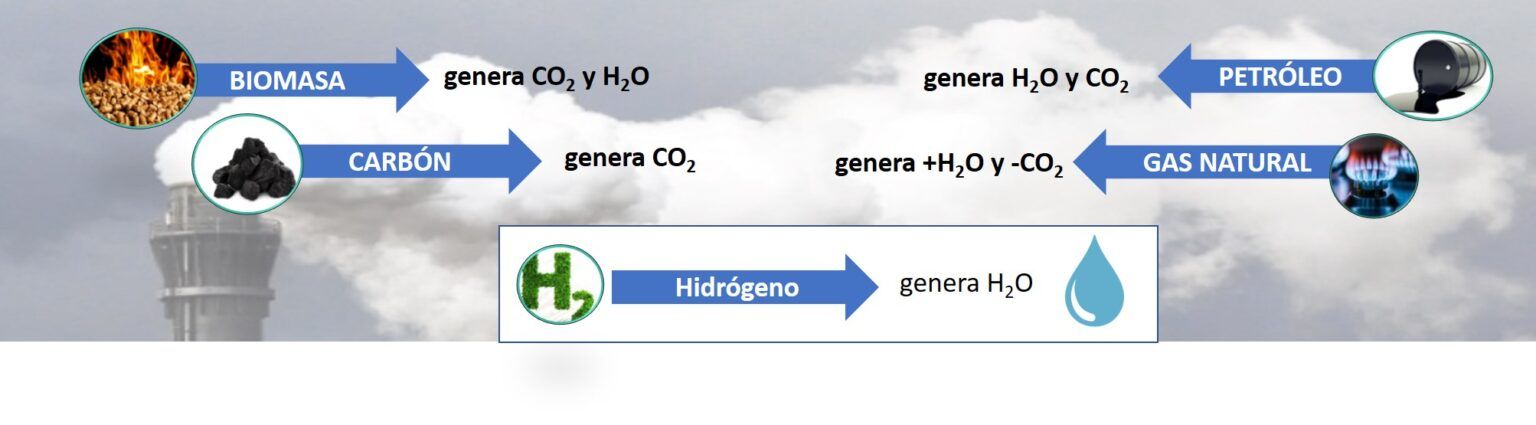
Green hydrogen comes from renewable energy sources and its use as a fuel does not generate CO2 emissions.
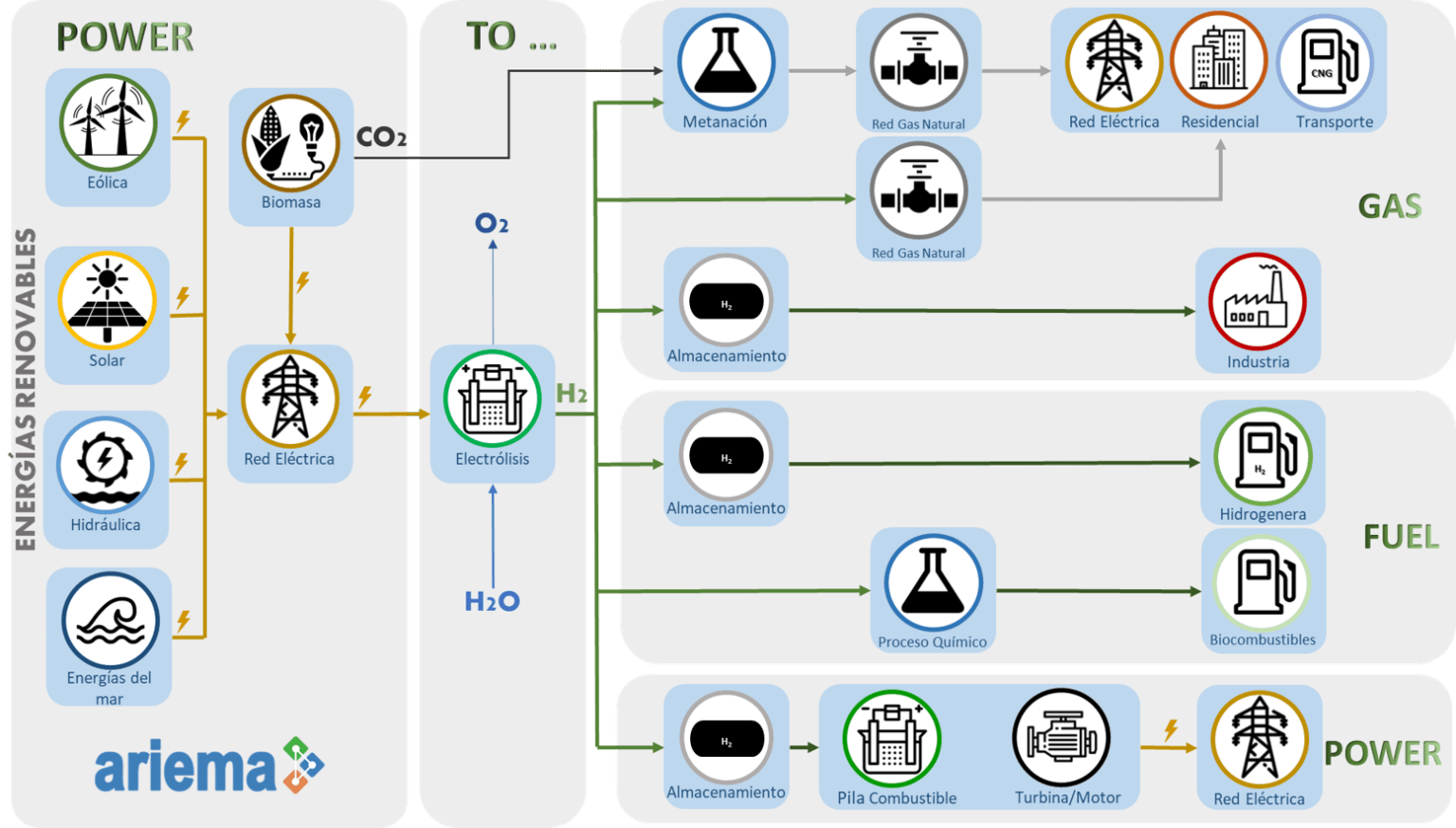
Electrolysis is the decomposition of water (H2O) into oxygen (O2) and hydrogen (H2) using electrical power. Hydrogen is produced in an electrolyser, requiring only water and electricity.
This hydrogen can then be converted back into electrical energy through the use of fuel cells, electrochemical devices capable of converting the chemical energy contained in a fuel, such as hydrogen, into electrical energy when required.
So… what can hydrogen be used for?
Hydrogen is an energy carrier, making it a versatile solution for multiple applications:
Electricity demand management
- It would enable greater penetration of renewable energy sources, as hydrogen can be produced at times when there is a surplus of renewable energy.
Electricity generation
- Stored hydrogen can be converted back into electricity, filling any gaps that may arise in electricity generation.
Synthetic fuels
- Decarbonisation of the natural gas grid by blending it with renewable synthetic gas.
- Replacement of natural gas with renewable hydrogen to generate process heat in industry.
- Production of synthetic fuels for specialist applications, such as aviation.
Transport
- Fuel cell electric vehicles as replacements for conventional vehicles: cars, lorries, buses, trains, ships, etc.
- Decarbonisation of aviation (synthetic fuels).
- Decarbonisation of the maritime and rail sectors through the use of renewable synthetic fuels in conventional engines.
Energy in industry
Furthermore, green hydrogen could reduce by 50% the gap between CO2 emissions under the Reference Technology Scenario (RTS) and the 2°C target scenario.