Hydrogen and Fuel Cells: From I+D+i to Market
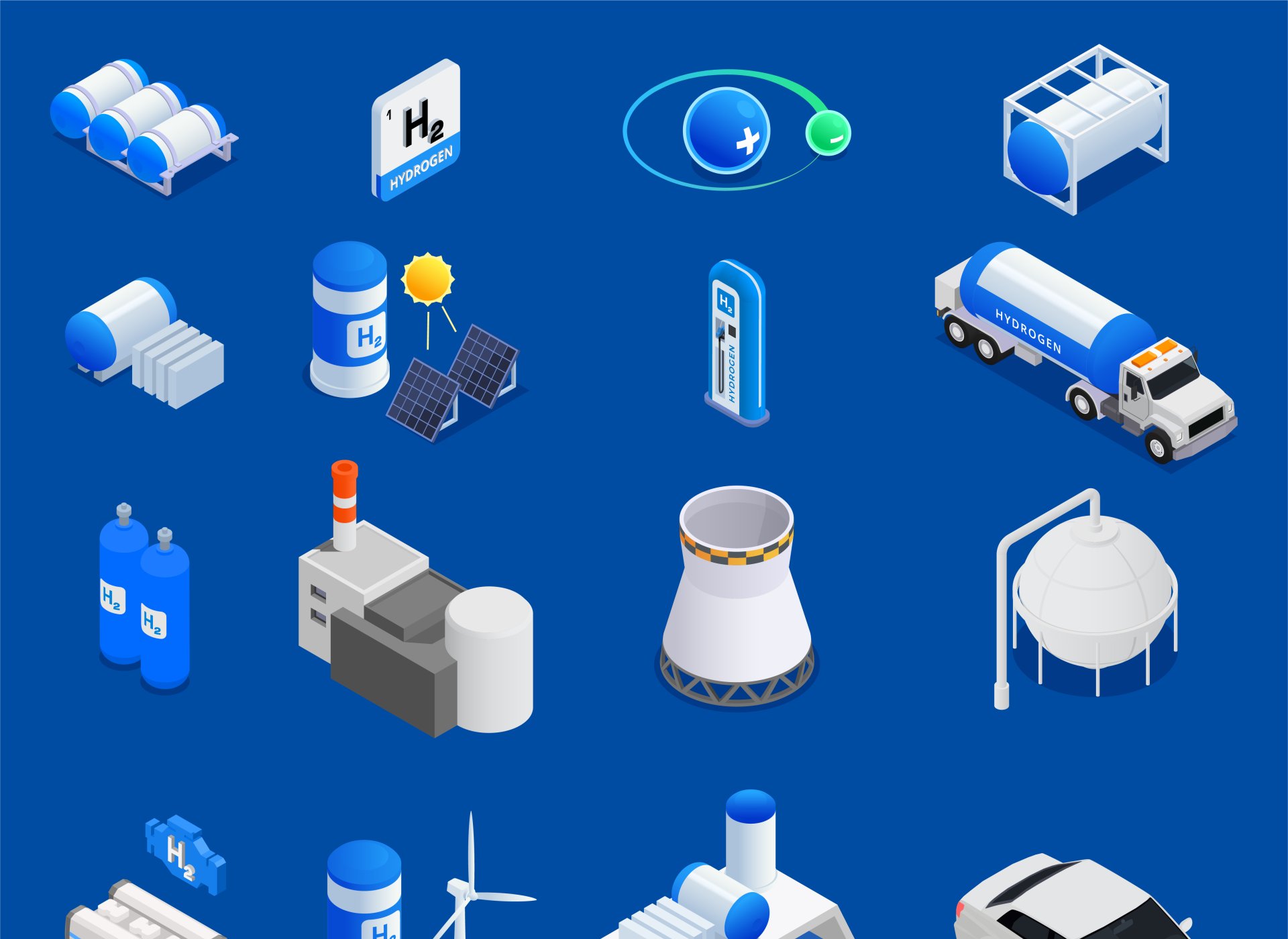
No single energy source is “the only solution”. Hydrogen and fuel cells offer significant technological advantages in terms of improving efficiency and environmental performance.
Given the fluctuations in public opinion regarding “what the energy of the future will be”, I would argue that there is no single answer. Energy needs are substantial, diverse and dispersed across both time and space. Meeting these needs is therefore complex and will require the use of several primary energy sources (with an increasing contribution from renewables), different “secondary” forms of energy or “energy carriers” (such as electricity and hydrogen), and increasingly efficient equipment (such as fuel cells).
Hydrogen and fuel cell technologies offer two key advantages. Hydrogen (H2) is the only fuel that produces only water vapour when combusted (H2 + ½ O2 = H2O). A fuel cell is a device that generates electricity from the chemical energy of a fuel with efficiencies far higher than conventional equipment: 60% compared with 40% for a good slow-speed diesel engine.
Half of all clean energy patents relate to hydrogen and fuel cell technologies: one thousand patents per year.
To understand the importance of R&D in hydrogen and fuel cells during these years, we need only look at the figures for patents in “clean energy”. According to a study conducted by Cleantech Group, based on data from the US Patent Office, more than 2,000 clean energy inventions are now patented each year, compared with around 1,000 before 2009. Of these patents, approximately half relate to fuel cells. As many patents are filed for hydrogen and fuel cells as the COMBINED number of patents for solar energy, wind energy, biomass, electric vehicles…
Looking at the ranking of companies filing the most patents gives us a clear indication of “the market to come” for these technologies: hydrogen vehicles (Honda, General Motors and Toyota each have around 100 patents per year), consumer electronics (Samsung, Panasonic…) and stationary applications (UTC, Ballard…).
Is Spain keeping pace with the research efforts of other advanced countries? NO, we are far behind… because there are still no niche markets here.
The leading countries are the United States, Japan, Germany, South Korea and Canada. Spain is far behind the level of effort that would be expected of us, as demonstrated by the fact that, among the energy projects funded by the Ministry of Science and Innovation (INNPACTO programme) in 2011, only 2.6% were dedicated to hydrogen and fuel cells.
In my opinion, the reason is neither a lack of research capabilities nor a lack of capacity among companies already active in this sector. The key difference is that the leading countries already have thriving markets for applications, supported by their public authorities, which generate niche business opportunities for their companies.
Niche markets. A business worth more than $2 billion in 2013, 200 MW and more than 100,000 units.
According to data up to 2012 and forecasts for 2013 recently published by Pike Research, whose figures have been used by the US DoE, fuel cell sales have grown spectacularly, from just over $500 million in 2009 to more than $2 billion in 2013 (a fourfold increase in four years). By application, stationary applications account for the highest revenue, followed by transport and, finally, portable electronics.
For a more detailed picture of these niche markets, we can analyse data provided by Fuel Cell Today (part of the British company Johnson Matthey PLC), which show the impressive rise in units sold (excluding small fuel cells used in toys and educational equipment) to almost 80,000 units in 2012. In terms of units, smaller fuel cells used in portable applications naturally account for a greater proportion.
What are these niche markets where so many units are already being sold? Toys, kits, phone chargers, vehicles, high-quality electricity generation, integration with renewables…
Some relevant examples of niche markets are as follows:
- Toys and educational kits. Did you know that remote-controlled cars powered by hydrogen produced using solar energy have been sold in Spanish toy shops for years? No more having to stop playing because the batteries have run out. It is also worth highlighting the work of the Spanish industry in this field through the AIJU technology centre.
- Phone chargers. If you “enjoy” using a smartphone – what a bad habit we have of calling things smart – you already know what it is like to run out of battery in less than a day. While we wait for long-range phones with “instant” fuel cell recharging to reach the market (Samsung, Motorola and even Apple have developments underway…), chargers are already available.
- As an initial stage in the competition between battery electric vehicles and hydrogen fuel cell electric vehicles, thousands of fuel cell-powered forklift trucks are already being sold in the United States. Advantages: greater range and shorter refuelling times. Incidentally, they also benefit from subsidies there…
- With regard to “high-quality” electricity generation, the applications where hydrogen and fuel cells are currently used most extensively are:
- Those where reliability is essential, because a fuel cell has very few moving parts, meaning that the possibility of it failing to “start” is lower than with an engine-generator.
- Those where environmental considerations are critical. Pollution from a fuel cell is virtually zero.
- Those where energy efficiency is a priority. For example, Apple is going to use a 5 MW fuel cell at its new facilities, with biogas as the primary energy source, because for the same amount of electricity generation, primary energy consumption is lower when a fuel cell is used.
- Combining these new technologies with renewable energy is particularly useful because hydrogen solves the main disadvantage of renewable sources: we can control production insofar as surplus renewable energy is used to produce hydrogen. Significant work has been carried out in this field in Spain by large companies such as Abengoa, Acciona and Gas Natural, as well as smaller companies such as Ariema and Accadue. This gives our country an important competitive advantage. Market opportunities are already opening up in countries such as India, where legislation encourages the use of renewable energy combined with hydrogen in the deployment of telecommunications repeaters.
In just two years, major multinational companies will begin selling hydrogen cars. If we replaced our current car with a hydrogen fuel cell vehicle, even using fossil primary energy, we would consume half as much fuel.
A hydrogen car is an electric car that differs from the battery-powered vehicles currently on the market because it generates electricity on board from stored hydrogen. Its advantages over battery vehicles include the following: while their performance makes them useful mainly for urban driving, a hydrogen car such as the Honda FCX Clarity has a range of 460 km and can be refuelled in four minutes. And it is “a car”, not a motorbike with four wheels.
To understand the significance of switching to a fleet of hydrogen fuel cell vehicles, it should be remembered that while the world's best combustion engine has an efficiency of approximately 42%, a car engine has an efficiency of around 20%. If we convert the same fuel into hydrogen (with an efficiency of 80%) to supply a fuel cell (60% efficiency), which in turn powers an electric motor (90%), we find that, by using hydrogen, we consume half as much of the original fuel to travel the same distance! …and, as an “additional bonus”, CO2 generation is centralised, meaning that we avoid a great deal of pollution in urban areas and make capturing this CO2 much more viable.
Having outlined this possibility, in Spain's particular case, having a fleet of hydrogen vehicles would allow renewable hydrogen to be progressively introduced at our filling stations, helping to improve the efficiency and sustainability of our transport and energy systems (and substantially reducing our imports of fossil fuels).
Major manufacturers have announced that they will begin selling hydrogen cars in 2015, starting with small fleets while costs fall rapidly. Major strategic corporate moves are already taking place, such as the recently announced alliances to develop and sell hydrogen cars: BMW with Toyota, Mercedes with Ford and Nissan…
Being ready in time will require the deployment of hydrogen filling stations. In the United Kingdom, the “UK H2 Mobility” initiative has been launched, led by the Minister for Business, in which three government departments and private companies are planning the country's participation in the hydrogen market; they have already planned the deployment of hydrogen filling stations, which is an essential prerequisite for vehicles to be marketed. Spain also has to do this “as a legal requirement”, as the European Union approved it for all its Member States on 24 January. We should view this obligation as an opportunity and coordinate public authorities with the sector to ensure it is implemented properly. To achieve this, we can rely on the Spanish Hydrogen and Fuel Cell Technology Platform, funded by MINECO, in which the entire sector participates.
In the United States alone, 700,000 jobs could be created. This represents an OPPORTUNITY for Spain.
But ultimately, what are we talking about? In addition to the environmental benefits, we are talking above all about business opportunities and job creation. One of the reasons why the United States is backing these technologies can be found in the report to the US Congress prepared by its Department of Energy in 2008, according to which hydrogen vehicles alone could create 675,000 net jobs in the country before 2020. According to Fuel Cells 2000, almost 40,000 people were already working in this industry in February 2011. What can we expect in Spain? Our Technology Platform is finalising a detailed study which, as our dear friend and colleague Pedro Sánchez used to say, points in two directions: we can seize this opportunity to create jobs and support our energy sector, particularly the renewable energy industry, or we can do nothing… in which case we could even run a serious risk of losing industry in sectors such as the automotive industry to countries that have committed to hydrogen and therefore have filling stations, technology…
Article included in issue no. 38 of the Spanish Energy Club's “Cuadernos de Energía” publication. March 2013.