


Hydrogen or ammonia: the future of energy storage
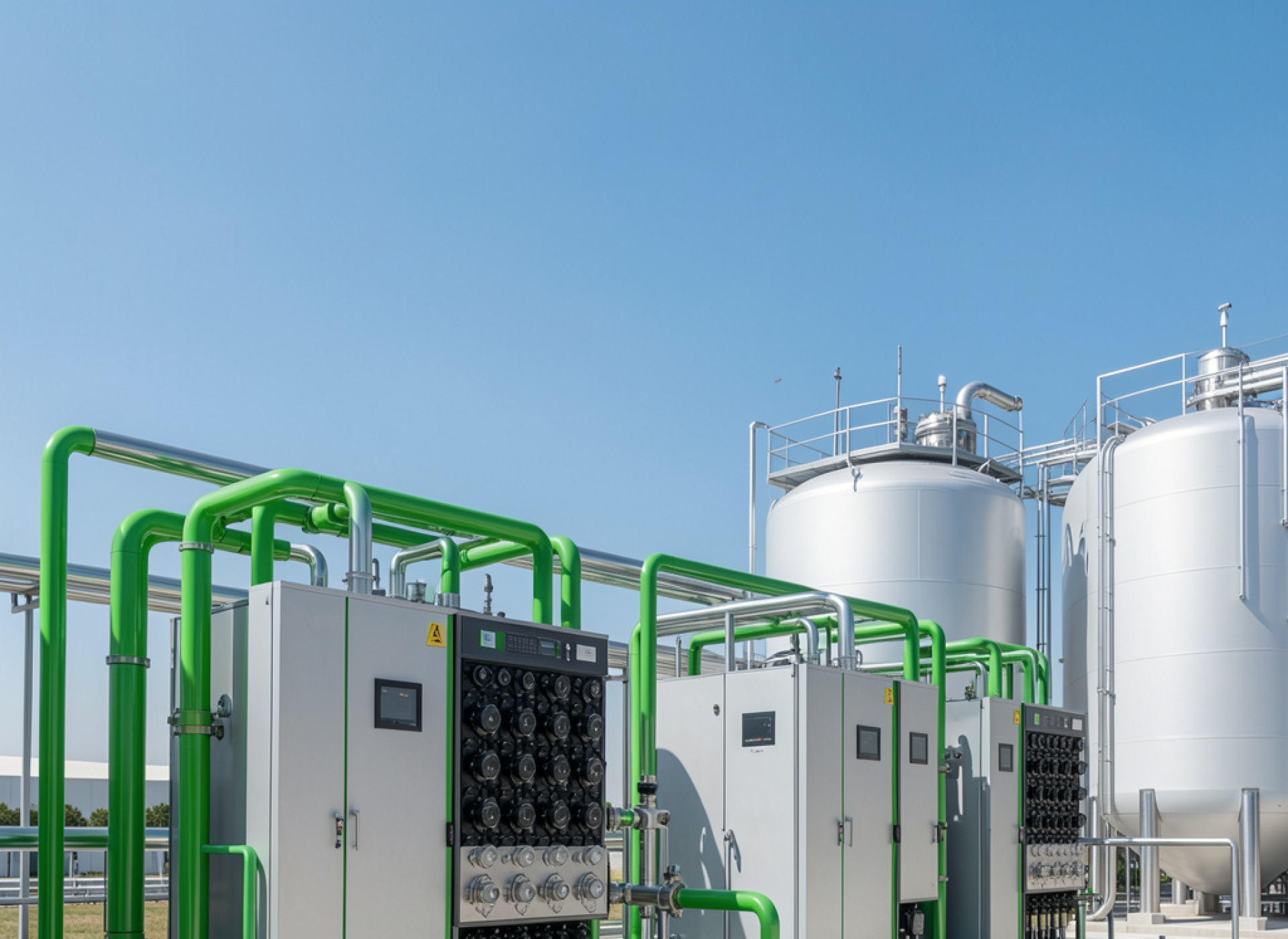
Two alternatives for industrial decarbonisation and transport
The future of renewable energy depends not only on how we generate it, but also on how we store it. The intermittency of solar and wind power means that efficient solutions are needed to store this energy and use it when required. In this context, renewable hydrogen and ammonia are emerging as two promising options, although each presents different challenges.
Hydrogen, a versatile option
Hydrogen is an energy carrier that can be produced using various methods. The most sustainable option, green hydrogen, is obtained through water electrolysis using renewable electricity (Hydrogen Europe, 2023). There is also blue hydrogen, produced from natural gas with CO₂ capture, and grey hydrogen, produced without emissions capture and still dominant in the market (ISPT, 2023).
Production and storage
Green hydrogen is essential for the decarbonisation of sectors that are difficult to electrify, such as steelmaking, the chemical industry and heavy transport (Hydrogen Council, 2023). Its production through electrolysis remains costly, but advances in efficiency and reductions in renewable energy costs are expected to bring its price down over the next decade (H2eart for Europe, 2023).
There are three main methods for its storage and transport:
- Compressed gas: Stored at pressures of up to 700 bar, requiring strong and expensive materials (ISPT, 2023).
- Liquid hydrogen: Kept at -253°C, although liquefaction consumes between 25 and 30% of the energy contained in the hydrogen (CAPCI, 2023).
- Metal hydrides: They provide greater safety, although with lower energy density and higher OPEX (Hydrogen Council, 2023).
Despite its versatility, hydrogen logistics are relatively complex. At present, only 10% of the hydrogen produced is transported over long distances, while the remainder is consumed at the point of production (CAPCI, 2023).
Renewable ammonia: an alternative with existing infrastructure
Ammonia, a compound of hydrogen and nitrogen, has been used in the chemical industry for decades. It is produced through the Haber-Bosch process, which combines the two elements at high pressure and temperature. If the hydrogen used comes from renewable sources, the result is green ammonia, with net-zero CO₂ emissions (ISPT, 2023).
Advantages for storage and transport
Unlike hydrogen, ammonia is liquid at -33°C, making it easier to handle. It can be transported using existing ships and pipelines, significantly reducing infrastructure costs. More than 150 ports worldwide currently handle ammonia (H2eart for Europe, 2023).
In addition, ammonia has a higher volumetric energy density than hydrogen: 12.7 MJ/L compared with 8.5 MJ/L, making it a more efficient energy carrier for long-distance transport (CAPCI, 2023).
However, converting ammonia back into hydrogen entails energy losses. The cracking process, which breaks ammonia down into hydrogen and nitrogen, has an efficiency of 69% (ISPT, 2023).
Applications and use cases
Large-scale energy storage
Hydrogen and ammonia have significant potential for storing renewable energy. Hydrogen is ideal for seasonal storage in underground caverns, while ammonia can be used as a carrier for transporting hydrogen. (H2eart for Europe, 2023).
Mobility and maritime transport
The maritime transport sector is exploring ammonia as an alternative fuel. Companies such as Maersk and MAN Energy Solutions have developed engines capable of operating on ammonia (Hydrogen Europe, 2023).
Hydrogen, meanwhile, is better suited to land and air transport, particularly in fuel cell vehicles (ISPT, 2023).
Conclusion
Both hydrogen and renewable ammonia are viable solutions for the energy transition. Both make it possible to store renewable energy and reduce dependence on fossil fuels. However, the choice between them will depend on the specific application.
Hydrogen is more efficient for land mobility and use in industrial processes, but its storage and distribution remain challenging, and its implementation will require significant investment in infrastructure. By contrast, ammonia benefits from established infrastructure and can serve as a hydrogen carrier, although its conversion is not entirely efficient and results in energy losses.
As technologies evolve and costs fall, both solutions are likely to coexist across different sectors. The development of supportive policies and infrastructure projects will be crucial in determining which energy carrier plays the greater role in global decarbonisation. Collaboration between governments and industry will be essential to accelerate the adoption of these technologies and achieve emissions reduction targets in the coming years.
References
[1] Hydrogen Council. (2023). Hydrogen in Decarbonized Energy Systems. Hydrogen Council.
[2] Hydrogen Europe. (2023). Clean Ammonia in the Future Energy System. Retrieved from https://hydrogeneurope.eu.
[3] ISPT. (2023). Clean Ammonia Roadmap. Institute for Sustainable Process Technology.
[4] CAPCI. (2023). Climate Action Programme for the Chemical Industry (CAPCI). Deutsche Gesellschaft für Internationale Zusammenarbeit (GIZ) GmbH.
[5] H2eart for Europe. (2023). The Role of Underground Hydrogen Storage in Europe. Hydrogen Europe