


Hydrogen Production
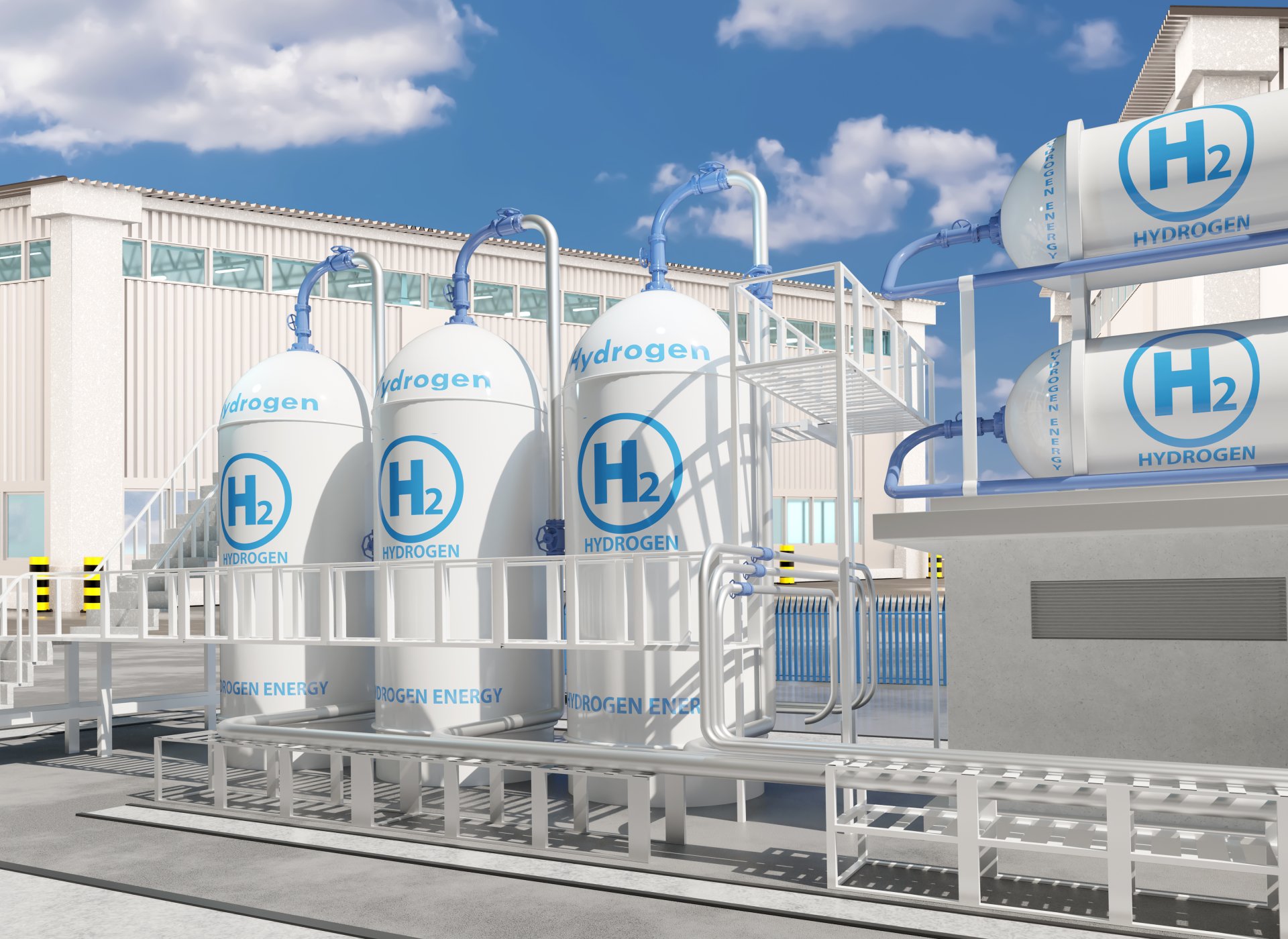
Currently, most hydrogen production worldwide is intended for industrial use as a reactant, for example to remove sulphur from petrol in refineries. It is used in many processes within the chemical industry, as well as in the metallurgical and glass industries, in the food industry for the hydrogenation of fats, and in many other processes.
But where does all the hydrogen consumed by these industries come from? As mentioned in the introduction, hydrogen does not occur naturally as H2, and certain thermal, chemical or electrochemical transformations are required to obtain hydrogen from different compounds that are abundant in nature, such as hydrocarbons or water.
The different types of processes are briefly explained below:
1. Hydrocarbon Reforming.
Steam reforming of natural gas is currently the most widely used process for producing hydrogen. It is a thermochemical process that requires high temperatures and subsequent purification of the final stream.
The reaction takes place in two stages:
CH4+H20 –> CO + 3H2
CO + H20 –> CO2 + H2
CH4 +2H2O –> 4H2 + CO2
In addition to steam reforming, there are other reforming techniques, such as partial oxidation and autothermal reforming.
2. Water Electrolysis.
This is an electrochemical process in which the water molecule is split into its two components, hydrogen and oxygen. There are currently several electrolysis systems:
- The most widespread system is alkaline electrolysis, which uses a basic or alkaline electrolyte and can achieve efficiencies of up to 80%, while enabling large-scale production at a reasonable cost. Within this technology, there are unipolar and bipolar electrolysers, systems with pressurised or atmospheric output, and systems capable of being connected to renewable energy sources such as solar or wind power and managing the resulting variability in power.
- There are also PEM electrolysers, which operate in an acidic medium and use a proton exchange membrane as the electrolyte. They are widely used for small-scale hydrogen production due to the advantages offered by solid electrolytes; compared with alkaline electrolysers, the main differences currently lie in their higher cost and lower production capacity.
- High-temperature solid oxide electrolysers also exist and are currently at the research stage.
3. Coal Gasification.
This is a process that converts solid coal into a gaseous fuel (consisting mainly of CO and H2), also known as syngas. The process involves partial oxidation, which generates a mixture from which a number of undesirable substances, such as sulphur compounds and ash from the original coal, must be removed using well-developed techniques. The result is a cleaner and more versatile gaseous energy source.
4. Thermolysis.
This is the decomposition of water through purely thermal processes. As reaching the temperature required for direct thermolysis (≈3000K) is extremely difficult, complex chemical cycles are used to reduce the process temperatures (≈1000K).
5. Biochemical Production.
This is the production of hydrogen through biological processes, based on enzymes present in certain specialised microorganisms. Biophotolysis processes are particularly promising, as they use light directly to split the water molecule.
6. Photocatalysis and Photoelectrolysis.
This is the production of hydrogen by splitting water using solar radiation and chemical photocatalysts.