


Hydrogen Storage
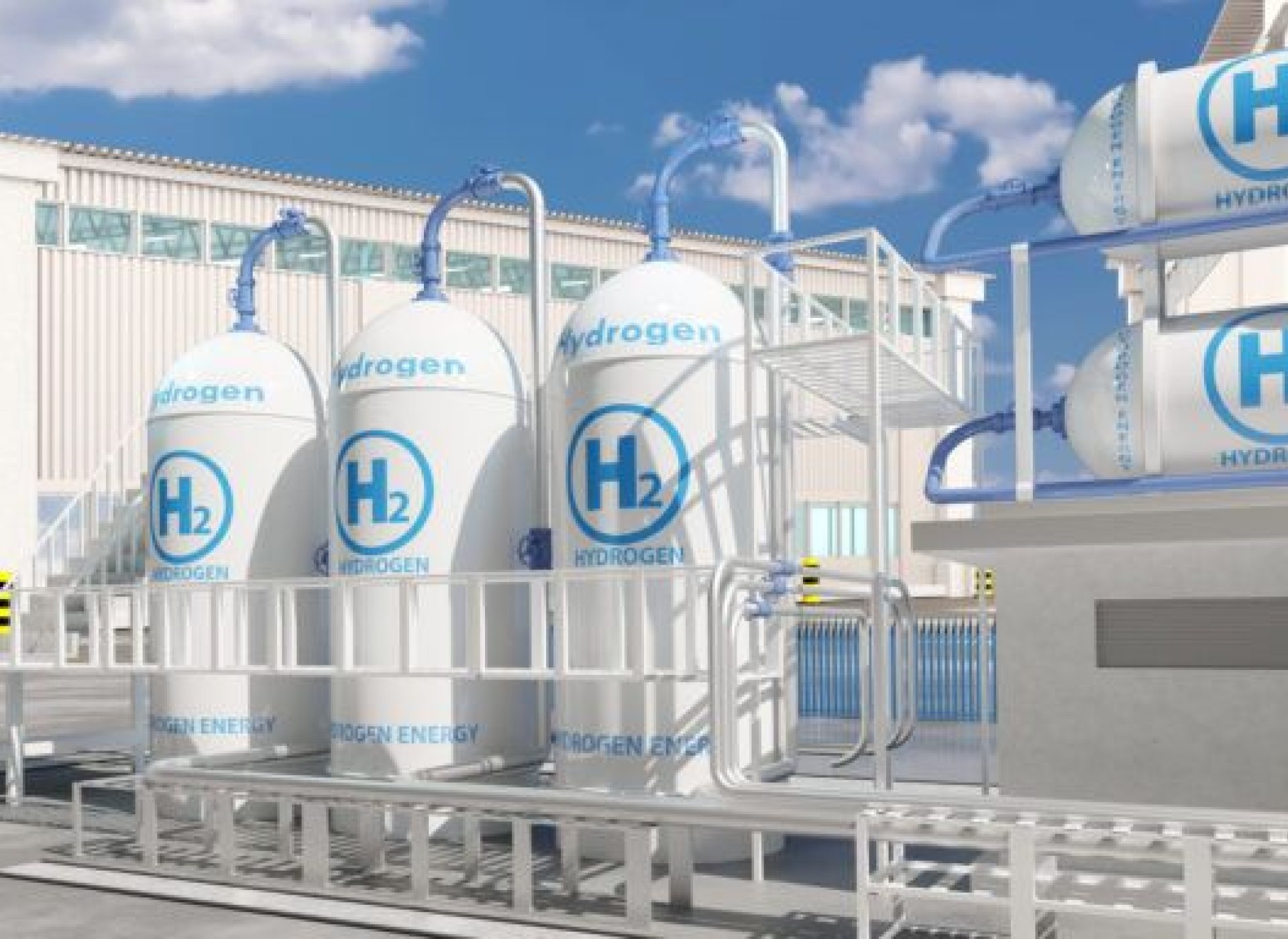
Efficient and safe hydrogen storage is a key factor in successfully establishing a hydrogen-based economy.
The storage systems currently available are not technologically advanced enough to meet the criteria of low cost, small size, high energy density, durability and safety. Therefore, the greatest challenge today is to develop technologies that meet these requirements, particularly for transport applications.
Hydrogen has a higher energy potential per unit of mass than any other type of fuel. However, as it is a gas with a very low density, the amount of energy that can be stored per unit of volume is very small.

Types of storage
Hydrogen storage can be divided into two types according to portability: stationary and non-stationary.
Most current research is focused on its use as a non-stationary energy carrier in transport and electricity generation, a field where low weight and compactness are essential.
Hydrogen can be stored in several ways, depending on its physical properties and the type of storage technology.
As compressed gas (CGH2)
This is the most common form of storage and the one with the highest level of technological maturity. On a small scale, the gas is contained at high pressure in cylinders made from different materials.
The gas storage pressure varies depending on the material from which the vessel is made. Composite materials (polymers, fibres and resins) are currently used to manufacture tanks, with the aim of increasing pressure and reducing the size of the container for the same quantity of gas.
Hydrogen tanks must be specially designed to withstand high pressures and fatigue caused by continuous filling and emptying cycles. They must also cope with a phenomenon known as hydrogen embrittlement (hydrogen embrittlement), whereby hydrogen permeates the metal and reduces the tank's ductility. One of the disadvantages of this type of containment is the high energy cost required to compress the gas inside the vessel.
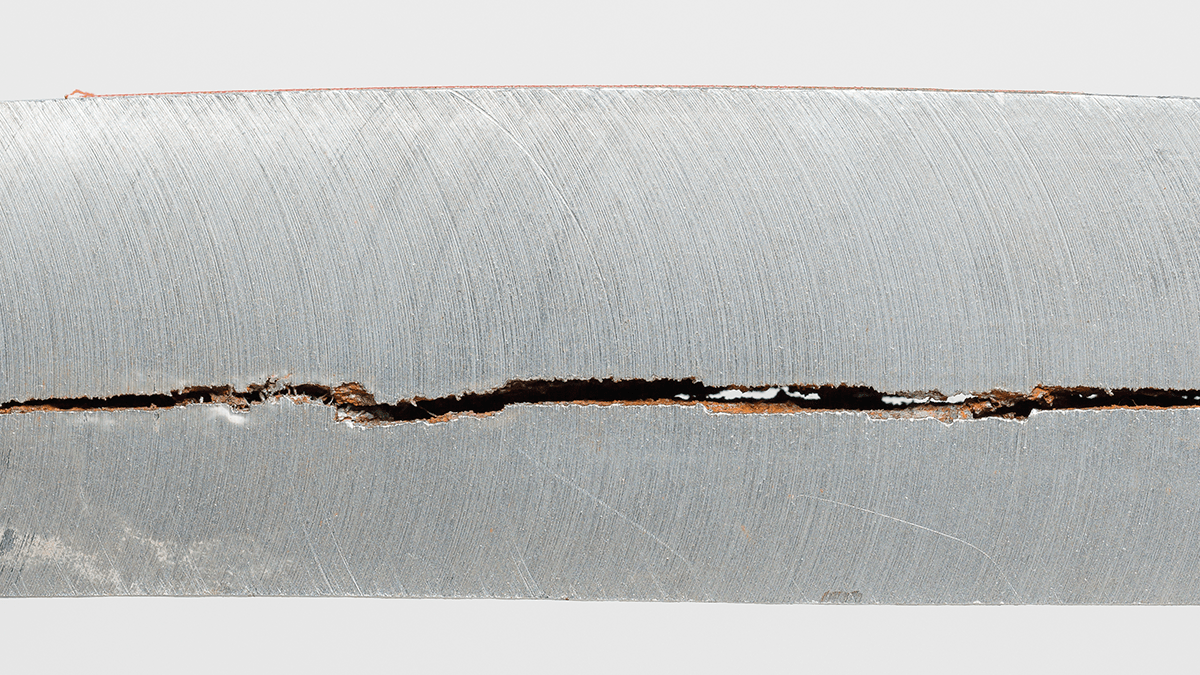
Hydrogen-induced cracking. / Wikipedia.
To date, four types of tanks have been developed according to their manufacturing architecture.
- Type I: It is made of metal (mainly steel) and is therefore the cheapest and heaviest type. It is generally used in stationary applications, such as industrial applications, and can store hydrogen at pressures of between 150 and 200 bar.
- Type II: Its inner section is made of steel and wrapped in a layer of glass or carbon fibres, allowing it to withstand higher pressures while significantly reducing its weight compared with Type I tanks, although it is also more expensive. The maximum storage pressure varies between 250 and 300 bar.
- Type III: Built with a thin layer of metal wrapped in a fibre and resin composite material, which reduces the weight of the container compared with the previous types. Its cost is also higher. For aluminium and glass-fibre cylinders, the maximum storage pressure is around 300 bar, while aluminium and carbon-fibre cylinders can withstand pressures of up to 700 bar.
- Type IV: The most expensive, but also the type with the best weight-to-storage ratio. They generally use high-density polyethylene plastic as a liner and a carbon/glass fibre material for the structure. It is the lightest of the four types, but also the most expensive. The maximum storage pressure is around 700 bar.
- Type V: This type of tank is still at a very early stage of development. It is constructed entirely from composite materials without a metal liner and weighs up to 20% less than Type IV tanks. At present, this tank is only capable of handling hydrogen at low pressures and further research is required.
As regards large-scale storage systems, hydrogen can be stored as compressed gas in stationary systems such as salt caverns, former aquifers and natural gas reservoirs. These systems offer a major advantage, as they reuse geological structures capable of containing large quantities of hydrogen at moderate pressures and at low cost.
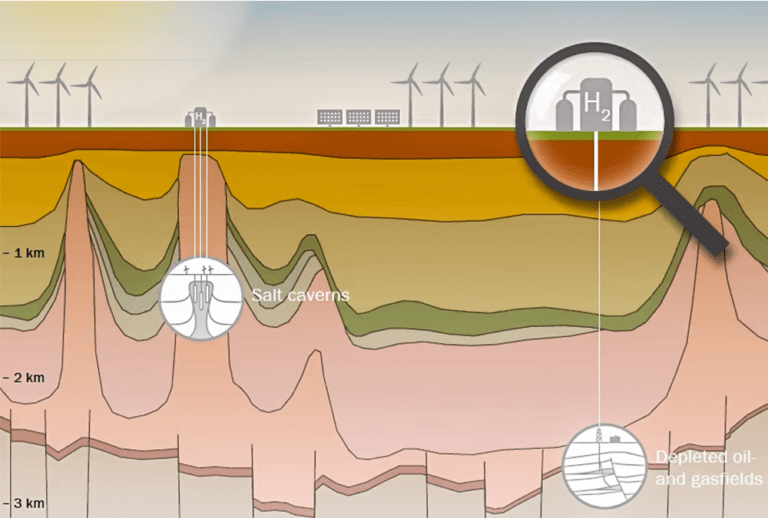
Research is being conducted into hydrogen storage in large natural underground cavities. / TNO Netherlands
As liquid hydrogen (LH2)
Hydrogen can be cooled to cryogenic temperatures (-253ºC) using methods such as the Linde-Hampson system, with the main advantage being that its energy density per unit of volume is much higher than that of gas-based solutions, even at low pressures.
When hydrogen is used in liquid form, a greater quantity can be stored in the vessel, as one cubic metre of liquid hydrogen can contain up to 71 kg, compared with 42 kg/m3 when hydrogen gas is stored at a pressure of 700 bar.
The most obvious disadvantage is the energy cost associated with the liquefaction process and maintaining a cryogenic temperature, which can amount to 30-40% of the total energy contained in the stored hydrogen, as well as the tendency of the liquid to evaporate when confined for long periods of time.
At present, the most common applications for this type of hydrogen include its use as a fuel in the space and aviation industries and for the intercontinental transport of hydrogen by sea, among others, as it is the form of storage that offers the best weight-to-volume ratio.
In borohydrides, ammonia (NH3) and methanol (CH3OH)
In the search for new forms of liquid storage, recent years have seen research into the use of borohydride solutions with a high hydrogen content, particularly ammonia borane (H3NBH3), from which hydrogen would be released through a catalytic hydrolysis reaction.
The possibility has also been explored of storing hydrogen using liquid ammonia (NH3).
The advantage of this system is that, as this chemical compound is widely used in industry, the storage and transport infrastructure is already highly developed.
This could be useful during the early stages of the transition towards a hydrogen economy, because the high cost of building the infrastructure required to transport hydrogen gas (hydrogen pipelines) from scratch could limit its large-scale implementation.
Another storage method under investigation involves using organic liquids with a high hydrogen content, such as toluene (C7H8) or methylcyclohexane (C7H14).
In metal hydrides
Metal hydrides are chemical compounds with considerable potential for storing and supplying hydrogen in a safer and more practical way than the previous methods (compressed and liquefied gas), and with a greater storage capacity per unit of volume.
The storage method consists of injecting hydrogen into a chemical compound that absorbs it. The process can subsequently be reversed, releasing the injected hydrogen in a controlled manner through a procedure known as absorption/desorption.
Several studies have confirmed that the hydrogen absorption and desorption properties can be improved by adding catalysts to the hydrides, alloying them or developing nanostructures.
A metal hydride must meet certain technical requirements in order to be considered a potential hydrogen storage system. These requirements are:
- The hydride must be easy to form and decompose.
- The kinetics of the absorption and desorption reactions must be fast enough to meet the system's charging and discharging requirements.
- The equilibrium pressure corresponding to the hydride decomposition temperature must at all times be compatible with the system's safety requirements.
- It must maintain optimum operating conditions for the greatest possible number of charge/discharge cycles.
- It must have the greatest possible tolerance to gaseous impurities carried by the hydrogen, as these hinder the reactions and reduce the system's service life.
There are a large number of commercially available hydrides, with charge/discharge cycles at different pressures and temperatures. The field of application of metal hydrides is not limited solely to hydrogen storage, but can also be extended to new developments in heat pumps, hydrogen compressors and purification equipment.