The Importance of Hydrogen in the Energy Transition
In February 2019, the Council of Ministers approved, at the proposal of the Ministry for the Ecological Transition, the submission to the European Commission of the draft National Integrated Energy and Climate Plan 2021-2030 (PNIEC).
This PNIEC sets out a series of highly ambitious targets for 2030: a 21% reduction in CO2 emissions, achieving a 42% share of renewables in total energy consumption, 74% of electricity generation from renewable sources, and a 39.6% improvement in energy efficiency.
The plan includes measures to promote renewable energy and envisages the use of hydrogen as a zero-emission energy carrier to overcome the challenges of the energy transition.
But what does the use of hydrogen as an energy carrier involve?
Hydrogen is the most abundant element in the universe. However, on Earth it is not found freely in gaseous form, but rather combined with other elements, such as oxygen to form water (H2O), carbon to form hydrocarbons, or other elements to form countless different compounds.
Hydrogen is an energy carrier, in other words, a substance that stores energy so that it can subsequently be released in a controlled manner. It can be used to produce heat through combustion (it is a fuel with a high calorific value), electricity (through an electrochemical process), or other products by using it as a raw material in various chemical reactions (synthetic fuels, fertilisers, etc.).
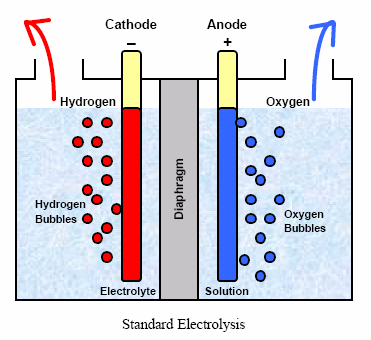
There are several methods for producing hydrogen. The two most widely used and developed methods are steam reforming of natural gas and water electrolysis. Both processes seek to separate hydrogen from the elements with which it is combined.
The electrolysis process separates water molecules into their components, hydrogen and oxygen, using electricity. If this electricity comes from renewable sources, the hydrogen produced will be emissions-free not only during its use but also during its production.
This hydrogen can then be converted back into electrical energy using fuel cells, electrochemical devices capable of converting the chemical energy contained in a fuel, such as hydrogen, into electrical energy when required. This is a highly efficient technology (as it is not subject to the Carnot limit), free from noise and vibrations (as it has no moving parts) and free from pollutant emissions (the only associated emission is water).
In this way, hydrogen will enable greater penetration of non-dispatchable renewable energy sources into the Spanish electricity system. Solar and wind energy are intermittent and highly seasonal, meaning that any electricity system with a high proportion of these technologies will require large-scale energy storage over long periods of time. This will be one of hydrogen’s major roles in the energy transition.
The applications of hydrogen and fuel cell technologies are highly diverse, ranging from stationary applications to portable and transport applications.
According to the Hydrogen Council, hydrogen will play a key role in the energy transition towards a more sustainable model based on renewable energy, with seven main roles:
- It enables greater penetration of renewable energy sources, integrating them more effectively and on a larger scale.
- It enables energy to be distributed easily between sectors and regions.
- It helps balance differences between supply and demand on the grid (energy storage).
- It enables the decarbonisation of transport (cars, trains, ships and even aircraft).
- It can be used as a raw material for different fuels by combining it with captured CO2.
- It enables the decarbonisation of industry, where it can be used as a raw material or to generate process heat.
- It enables the decarbonisation of energy use in homes.
According to the Spanish Hydrogen Association (AeH2), implementing these technologies in Spain could prevent the emission of 15.12 million tonnes of CO2 per year by 2030 and help to create 227,000 jobs, generating a domestic market worth €1.3 billion per year.
In short, the sector identifies numerous opportunities associated with hydrogen, including the decarbonisation of mobility, its contribution to the circular economy, the reduction of fossil fuel imports, and the integration and utilisation of renewable energy for the production of renewable hydrogen and its subsequent use as an energy source for mobility, industry and heat generation.